All braces work by the same principle — gradually moving teeth to the desired position. The difference is in material, aesthetics and price. Four main types exist.
1. Metal braces
Classic stainless-steel — the most common. Smallest, sturdiest, most effective. Despite visibility, often the first choice for complex cases.
- Pros: durability, precise control, great for children
- Cons: visible, discomfort in the first 1–2 weeks
2. Ceramic braces
Made of tooth-colored ceramic. Less visible than metal.
- Pros: aesthetic, comfortable
- Cons: more brittle, may stain from tea/coffee, slightly pricier
3. Zirconia braces
The most translucent and aesthetic option. Tooth-colored, resistant to staining.
- Pros: most aesthetic among fixed appliances
- Cons: pricier than ceramic, limited in complex cases
4. Lingual (inside) braces
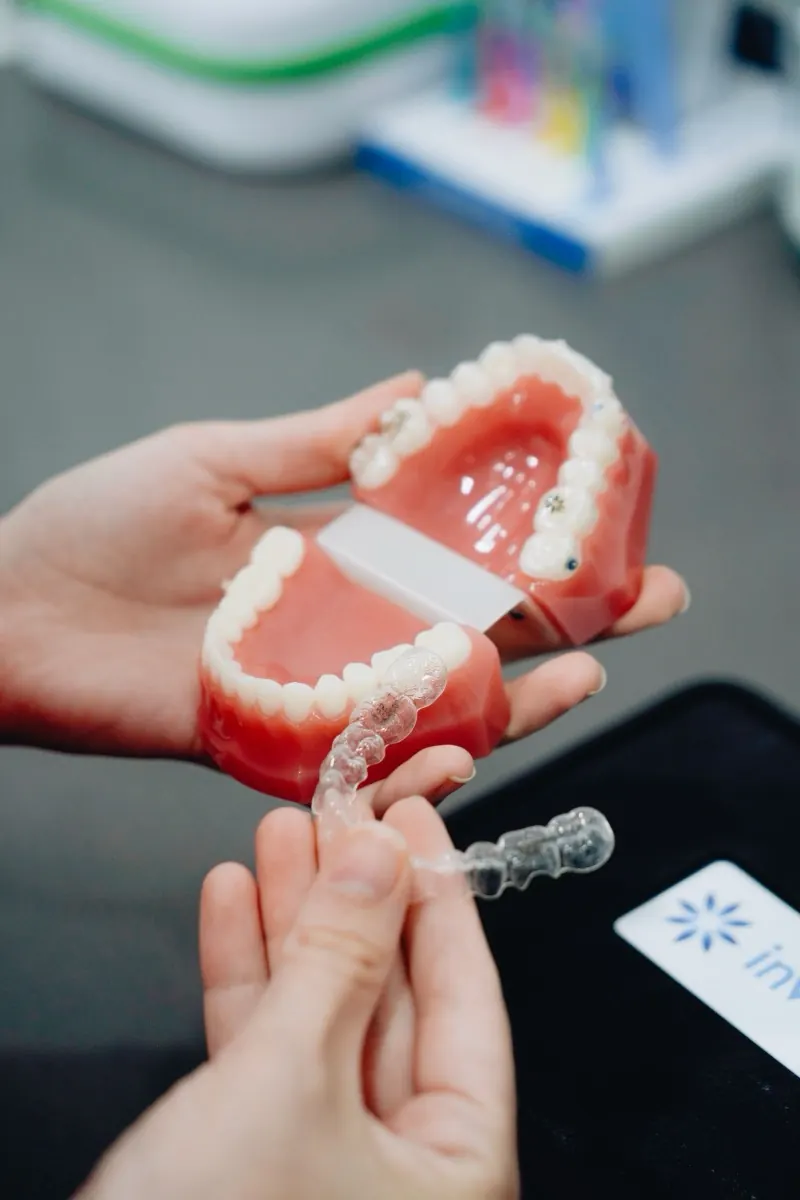
Attached to the inner (tongue) side of the teeth — invisible from outside. Custom-made.
- Pros: completely invisible
- Cons: hard adaptation (speech, tongue discomfort), longer treatment, highest cost
Which one to choose?
| Situation | Recommendation |
|---|---|
| Child and teenager | Metal |
| Adult, aesthetics matters | Ceramic or zirconia |
| Public profession | Lingual or aligners |
| Complex anomaly | Metal (most effective) |
| High budget + aesthetics | Zirconia |
Read more
Orthodontic consultation | +994 10 208 01 04