
Dental Lab
- Home
- Dental Lab
In-house dental lab in Baku: crowns and veneers made inside the clinic
Yes — German Dental Clinic has its own digital dental laboratory, in the same building as the treatment rooms. Crowns, veneers, splints and temporary teeth are not sent to an outside lab: they are designed and made here. That is why a single crown can be made within one appointment, and the dentist checks the fit on the spot.
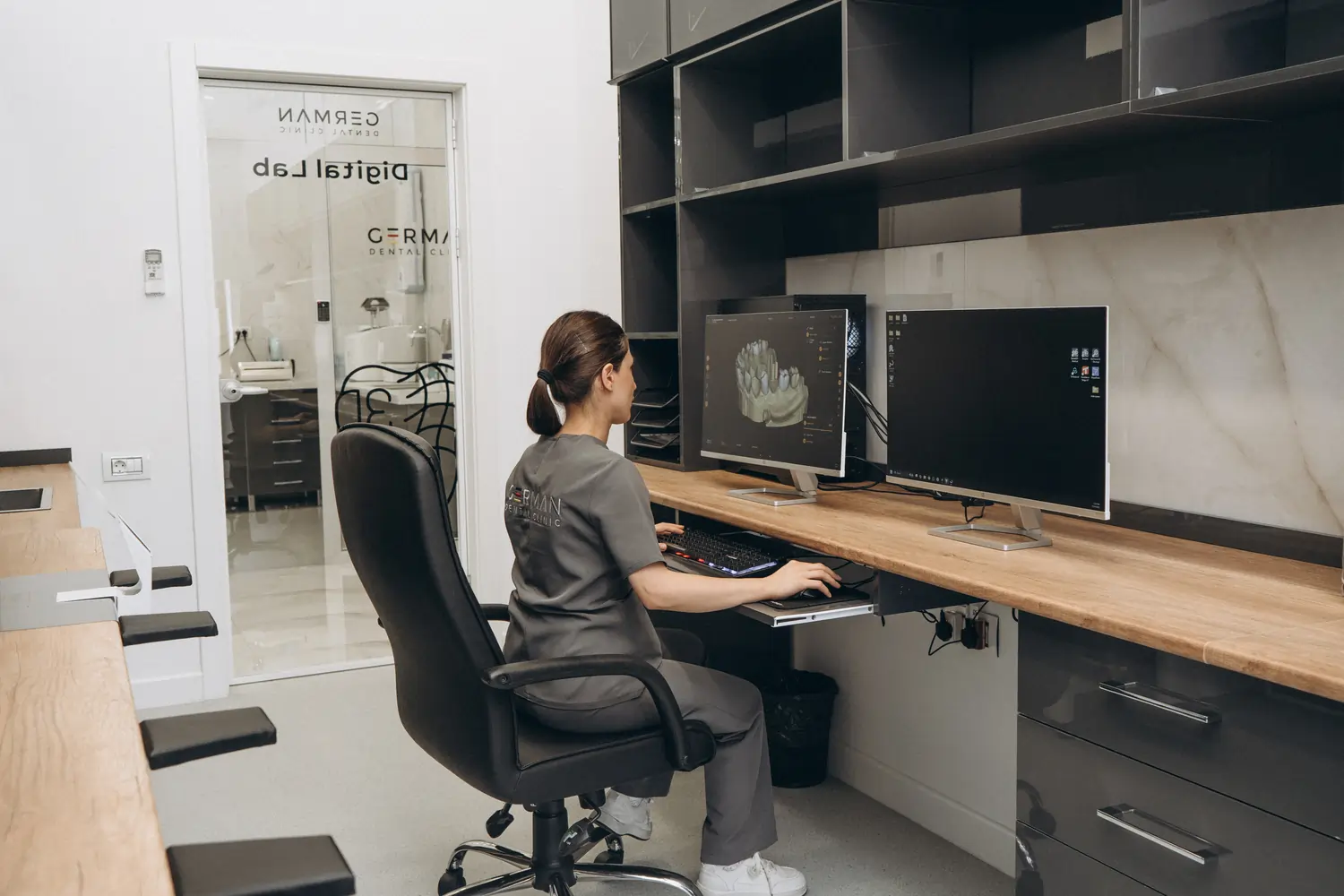
How the lab works
- Scan — instead of impression material, the Primescan intraoral scanner takes a 3D model of your teeth, and the scan goes straight to design.
- Design — the restoration is designed digitally on the 3D model of your teeth.
- Milling — crowns are milled on PrimeMill from zirconia or ceramic.
- Printing — temporary teeth, mouthguards and splints are printed on Primeprint.
- Fitting — fit and shade are checked in the clinic under the dentist's supervision.
The equipment is by Dentsply Sirona; the full list is on the equipment page.
Types of crowns made in the lab
- Zirconia crowns — milled from zirconia on PrimeMill; used together with veneers in the aesthetic reconstruction of front teeth.
- Ceramic crowns — milled from ceramic, with the shade matched to the neighbouring teeth.
- Crowns on implants — once the implant has integrated with the bone, an abutment and an individually made crown of zirconia or another ceramic are fixed on it (dental implants).
- Bridges — several connected crowns; depending on the extent, they take from a few hours to a few days.
- Temporary crowns — printed on Primeprint, they protect the tooth or implant until the permanent crown is ready; on implants they can sometimes be fitted on the day of surgery (immediate loading).
The material is chosen for the specific tooth after the examination — it depends on the tooth's position, the bite and the shade.
Same-day crown: what happens in one appointment
For a single crown the whole cycle can fit into one appointment: the tooth is prepared, Primescan takes a 3D scan, the crown is designed on screen and milled in the lab in the same building, and the dentist checks the fit, bite and shade before fixing it. No impression tray and no waiting for an outside lab. Bridges, several crowns at once and crowns on implants take longer — the timeline is given in the treatment plan.
Crown or veneer?
A veneer covers only the front surface of the tooth and is chosen when the tooth is largely intact. A crown encases the whole tooth and protects it from fracture, so it is the sounder option when the tooth is badly broken down, has become brittle after root canal treatment (endodontics) or carries a heavy chewing load. Both are made in the same lab. The full comparison: crown or veneer — which to choose.
Clenching or grinding at night (bruxism) is the most common reason ceramic crowns chip, so it is checked before treatment and, where needed, a night guard is printed in the same lab — see gnathology.
What it means for you
Fewer visits and less waiting: there is no impression travelling to another city and no finished work travelling back. If an adjustment is needed, it is made here too. For a patient coming from abroad, it means most treatment fits into one trip — see dental tourism. For veneers and crowns made in the lab, see aesthetic dentistry.
Frequently asked questions
Does German Dental Clinic have its own dental lab?
Yes. The clinic's digital CAD/CAM laboratory is in the same building as the treatment rooms and runs on Dentsply Sirona equipment: the Primescan scanner, the PrimeMill milling unit and the Primeprint 3D printer.
Can a crown be made on the same day?
Yes, a single crown can be milled from a 3D scan in the clinic's own lab and fitted within one appointment. Bridges and multiple restorations take from a few hours to a few days, and the permanent crown on an implant is fitted only once the implant has integrated with the bone — the timing is given in the treatment plan.
What does the lab make?
Crowns and bridges, veneers, temporary teeth, mouthguards and splints, as well as dentures. It works with zirconia, ceramics and biocompatible materials.
Why choose a clinic with its own dental lab?
Impressions and finished work are not sent anywhere, so there are fewer visits and less waiting. The dentist and the lab are in one building, so fit and shade are checked straight away and adjusted on the spot if needed.
What materials are the crowns made of?
Zirconia and ceramic; crowns on implants are zirconia or another ceramic. The material is chosen after the examination, taking into account the tooth's position, the bite and the shade.
Should I get a crown or a veneer?
A veneer if the tooth is largely intact and the aim is to change how it looks. A crown if the tooth is badly broken down, brittle after root canal treatment or carries a heavy chewing load. The dentist makes the final call after the examination.
Does a tooth need a crown after root canal treatment?
On back teeth a crown or an onlay is usually recommended: a root-treated tooth is more brittle, and this prevents a vertical fracture. On front teeth a composite restoration is often enough.
Does the lab make crowns for implants?
Yes. Once the implant has integrated with the bone, an abutment and a crown made individually in the clinic's lab are fixed on it. When immediate loading is possible, a temporary crown is sometimes fitted on the day of surgery.