
Periodontal Treatment
- Home
- Periodontal Treatment
Periodontal treatment in Baku — treating gum disease
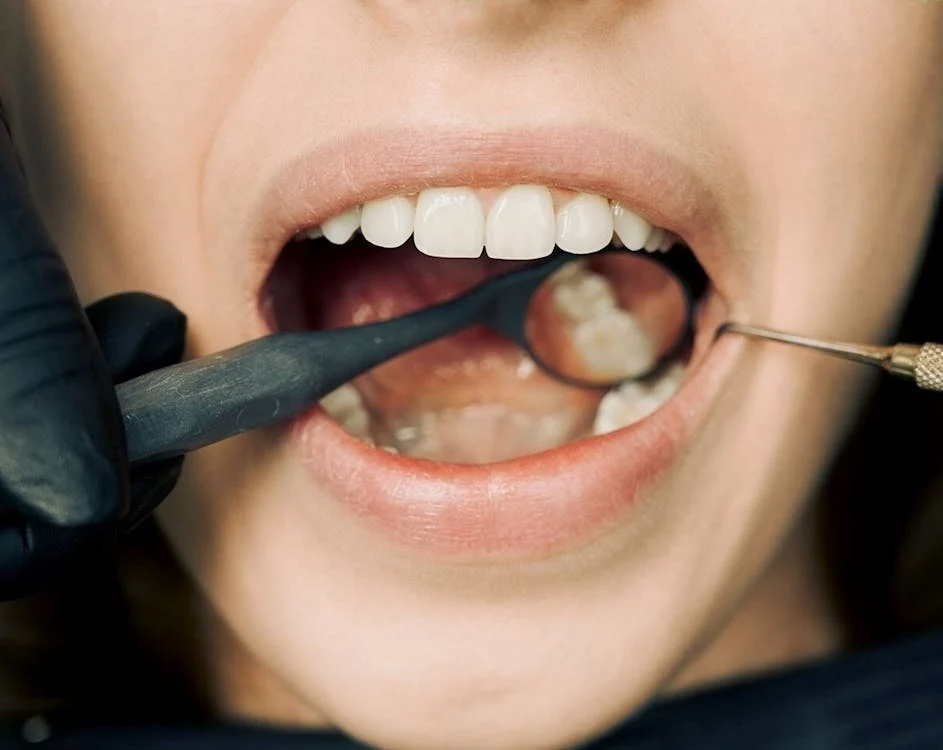
The periodontium is everything that holds a tooth in the jaw: the gum, the ligament and the bone. When those tissues become inflamed the tooth loses its support even if the tooth itself is sound. At German Dental Clinic periodontal treatment starts with pocket-depth measurement and radiographic assessment.
Signs to watch for
- gums bleeding when you brush;
- red, swollen or tender gums;
- persistent bad breath;
- receding gums and exposed roots;
- increasing sensitivity to cold;
- loose teeth or teeth that have shifted.
Bleeding is the earliest and most often ignored sign. Healthy gums do not bleed when brushed.
Gingivitis and periodontitis are not the same
Gingivitis is inflammation of the gum only — a fully reversible stage treated with professional hygiene. Once the inflammation reaches the ligament and bone, periodontitis begins: a pocket forms between tooth and gum and the bone level drops. Periodontitis cannot be fully cured, but it can be stopped and kept under control with proper treatment and a maintenance phase.
Treatment stages
- Diagnostics. Periodontal probing to measure pocket depth, a panoramic x-ray or CBCT, assessment of bone level.
- Initial phase. Professional hygiene, removal of calculus and plaque, correcting hygiene technique.
- Subgingival debridement (SRP). The root surface is cleaned and smoothed below the gum, removing the main source of inflammation.
- Re-evaluation. After 6–8 weeks the pockets are measured again and compared with the baseline.
- Surgical phase where indicated. For deep pockets — flap surgery, guided tissue regeneration, bone or soft-tissue grafting.
- Maintenance. Professional hygiene and review every 3–4 months — this is the phase that holds the result.
Periodontitis is not only a gum problem
Periodontitis is a chronic focus of inflammation linked with conditions such as diabetes, cardiovascular disease and pregnancy: the inflammation can worsen their course, and they in turn speed up periodontal breakdown. The treatment plan is therefore built around your general health, and smoking is discussed separately as a risk factor.
Daily care at home
- brushing twice a day with a soft brush, at 45° to the gumline;
- interdental brushes or floss every day — with periodontitis, interdental brushes work better;
- a mouthwash prescribed by the dentist, as a course rather than permanently;
- a water flosser as an additional aid where pockets are deep;
- stopping smoking — one of the strongest factors affecting healing.
Gum recession
When the gum pulls back the root surface is exposed: the tooth looks longer, reacts to cold, and decay starts sooner in exactly that area. The cause is not always inflammation — brushing hard with a stiff brush, a thin gum biotype, a tooth sitting outside the arch and bruxism all lead to recession. Treatment therefore removes the cause first: brushing technique is corrected and the distribution of the bite is checked. Where the exposure is extensive, covering the root surface with a soft-tissue graft is planned separately.
Professional hygiene and periodontal treatment are not the same thing
Professional hygiene removes plaque and calculus above and around the gum margin. Periodontal treatment works inside the pocket — on the root surface below the gum — and that needs anaesthesia, separate instruments and a controlled re-evaluation. Once pocket depth passes 4 mm, hygiene alone can no longer stop the inflammation.
Frequently asked questions
If the gums bleed, should brushing stop?
No, the opposite. Bleeding shows inflammation where plaque has built up; stopping brushing makes it worse. Switch to a soft brush and see a dentist.
Can periodontitis be cured?
Lost bone does not come back on its own, but the process can be halted. With treatment and regular maintenance hygiene the pockets shrink and the teeth are kept for years.
Is subgingival debridement painful?
The procedure is done under local anaesthetic. Gum tenderness and sensitivity to cold for a few days afterwards are common and pass.
How often is professional hygiene needed?
Once or twice a year with healthy gums, and every 3–4 months during the maintenance phase of diagnosed periodontitis.
See also: Periodontitis: stages and treatment · Gingivitis · Swollen gum: first aid · Tartar removal · Professional hygiene
Book an appointment — based on probing and the x-ray the dentist will set out the stages and the review schedule.