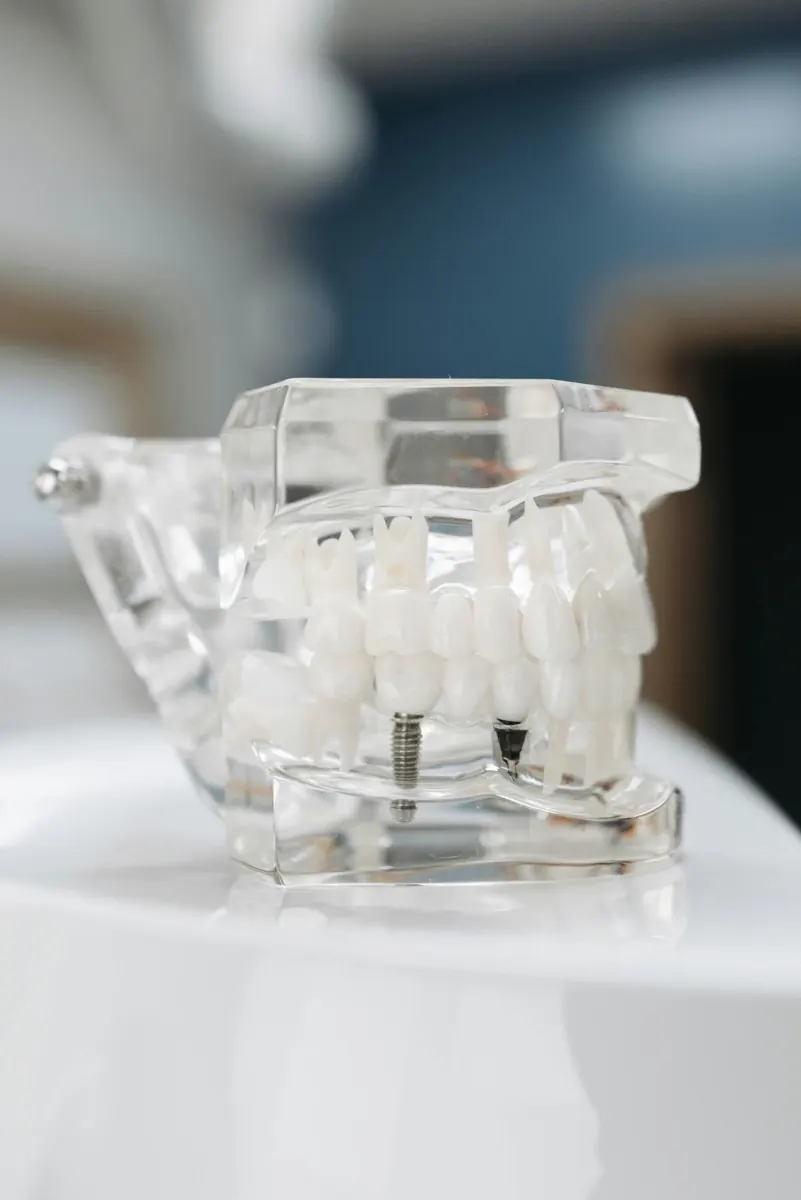

Dental flux (medical term — periostitis) is inflammation of the jawbone periosteum. Characteristic sign: visible cheek swelling. It usually develops from untreated caries or an abscess.
How flux develops
Bacterial infection from caries reaches the pulp, then travels through the canal to the tooth root and out to the bone surface. Pus accumulating between bone and periosteum causes periostitis.
Symptoms
- Visible swelling of the cheek, lip or under the jaw
- Red, bulging gum
- Severe throbbing pain
- Sharp pain on biting
- Fever (typically 37.5–38°C)
- General weakness, headache
- Bad taste in the mouth
How dangerous is it?
Flux is an EMERGENCY. Without treatment the infection can spread to bone (osteomyelitis), sinuses, floor of the mouth or even brain. Fever with breathing difficulty — go to emergency care.
Home first aid
- Rinse with warm salt water (1 tsp per glass)
- Cold compress on the cheek (15 min on, 15 min off)
- OTC painkiller (ibuprofen)
- Sit or lie with head elevated
What NOT to do
- No warm compresses — worsen inflammation and spread infection
- Do not self-prescribe antibiotics
- Do not try to drain the flux yourself
- No vigorous rinsing (do not push pus)
- Avoid alcohol and hot drinks
Professional treatment
- X-ray to find the infection source
- Drain pus under anesthesia (surgical incision or via canal)
- Antibiotic therapy — 5–7 days
- Root canal — if the tooth can be saved
- Tooth extraction — if preservation is impossible
- Restoration later (crown, bridge or implant)
Pain subsides within 24–48 hours; swelling resolves in 5–7 days.
Read more
Urgent consultation | +994 10 208 01 04