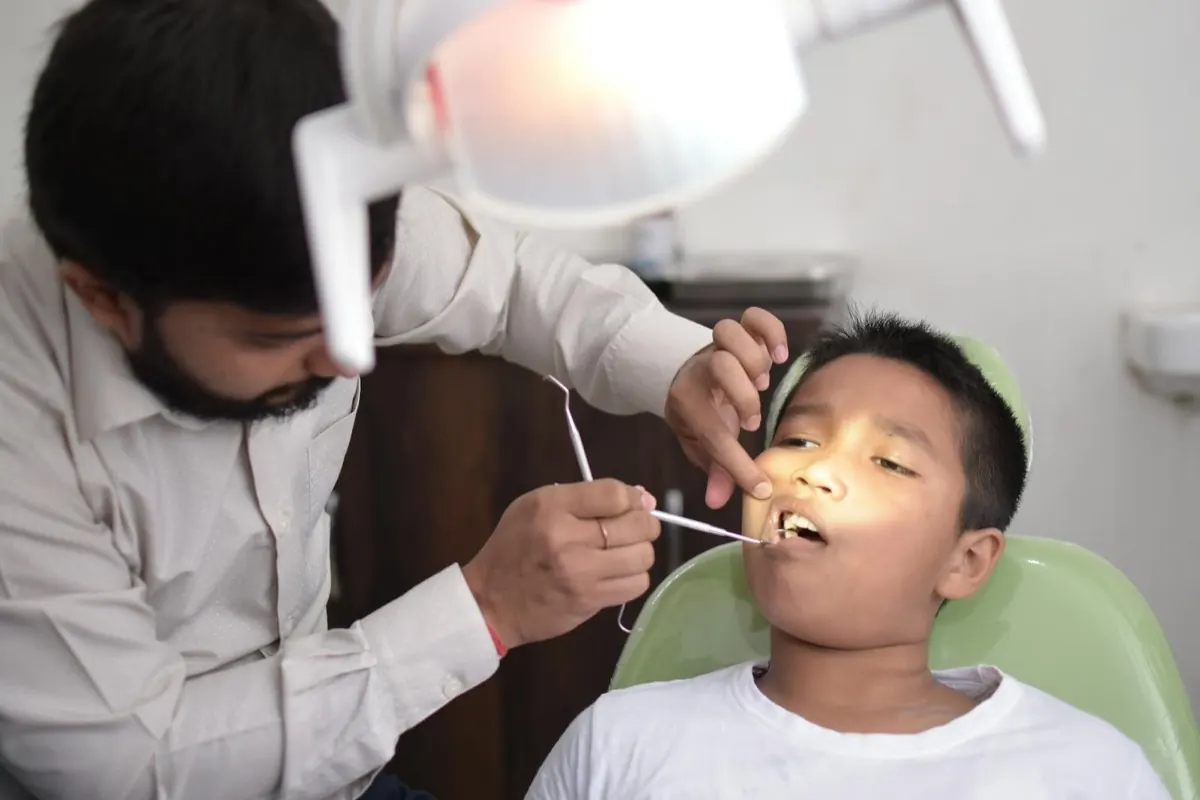
Some dental procedures require more than local anesthesia — patient anxiety, young children, or complex surgery may need sedation or general anesthesia. These are distinct methods, and choice depends on the situation.
Types of sedation
1. Light (minimal) sedation — nitrous oxide ("laughing gas")
- N₂O + oxygen mix through a nasal mask
- Patient stays conscious, talks, just relaxed
- Effect wears off within 5 minutes
- Ideal for children and anxious adults
2. Moderate sedation — oral or IV
- A pill (midazolam, diazepam) or IV
- Patient half-asleep but responds when spoken to
- May not remember the procedure fully
- Requires an escort — patient can't drive
3. Deep sedation
- IV (typically propofol)
- Patient unconscious but breathing on their own
- Mandatory anesthesiologist supervision
4. General anesthesia
- Full unconsciousness, artificial ventilation
- Inpatient setting (operating room or hospital)
- Anesthesiologist + intensivist team
- Highest safety protocols
When is it needed?
Sedation
- Severe dental phobia
- Strong gag reflex
- Long treatment sessions (2+ hours)
- Complex treatment in 4–7-year-olds
- Patients with special needs
General anesthesia
- Complex maxillofacial surgery (orthognathic)
- Multiple tooth treatment in children under 3
- Patients with cerebral palsy or autism spectrum
- Treating 8+ teeth in one session
- High-medical-risk patients
Is it safe?
With modern protocols — yes. Requirements:
- Anesthesia only by a certified anesthesiologist
- Full medical evaluation before procedure (heart, lungs, allergies)
- Special equipment — pulse oximeter, ECG, oxygen
- Observation for 2–4 hours after
- Children — must go home accompanied by a parent
Preparation
- No food 6 hours before (children — 4 hours)
- No alcohol or smoking 24 hours before
- Inform the doctor of chronic medications
- Comfortable loose clothing
- 24 hours after — no driving or major decisions
Read more
Consultation | +994 10 208 01 04