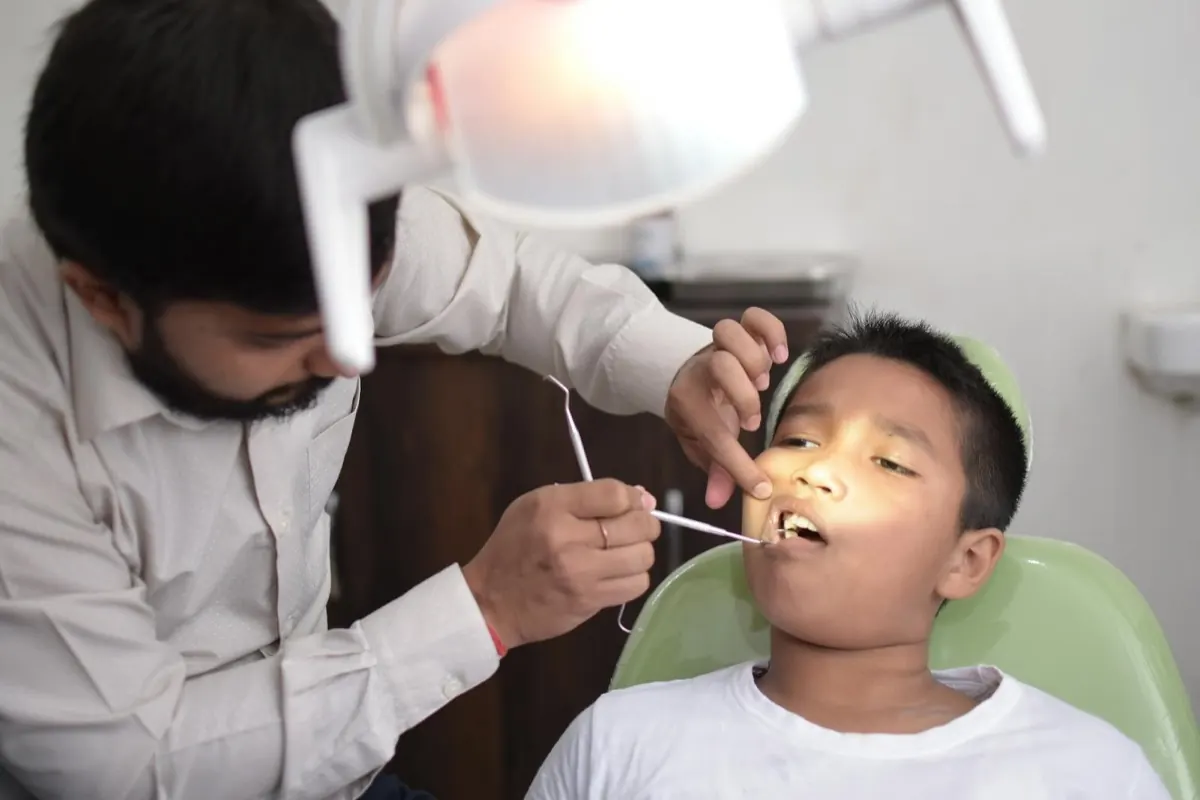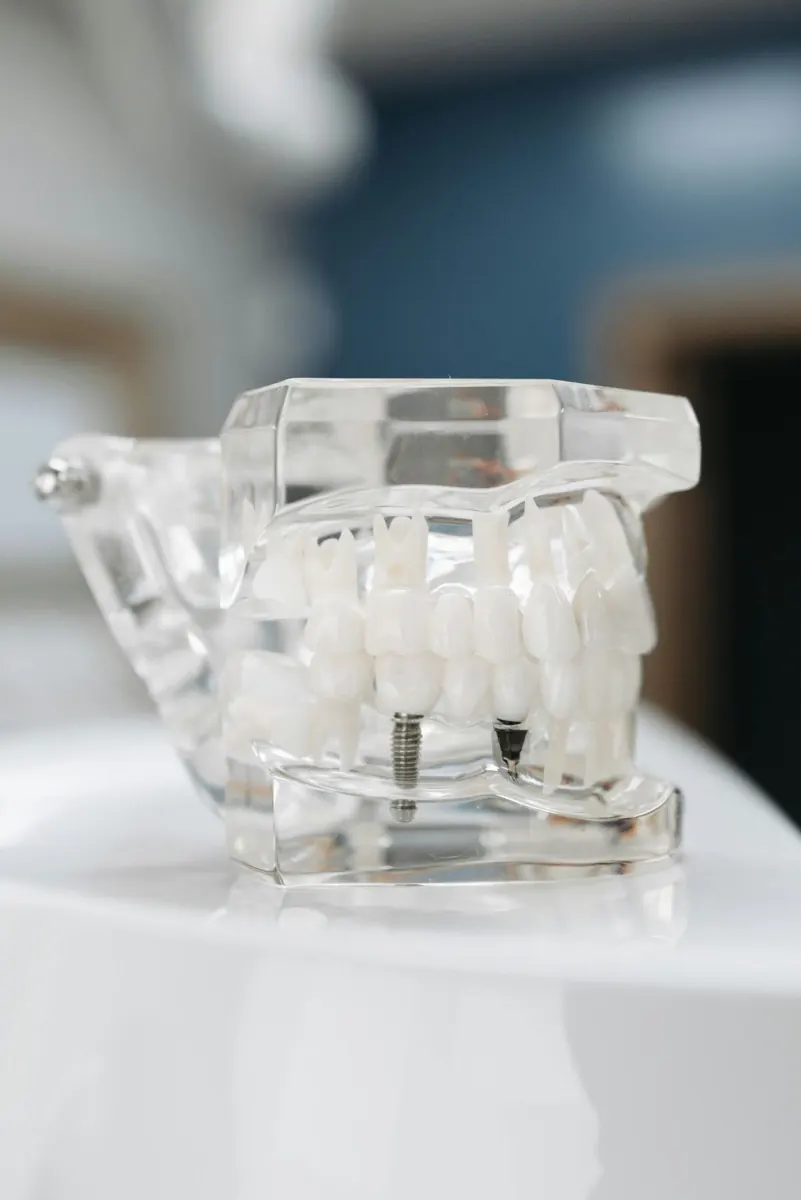
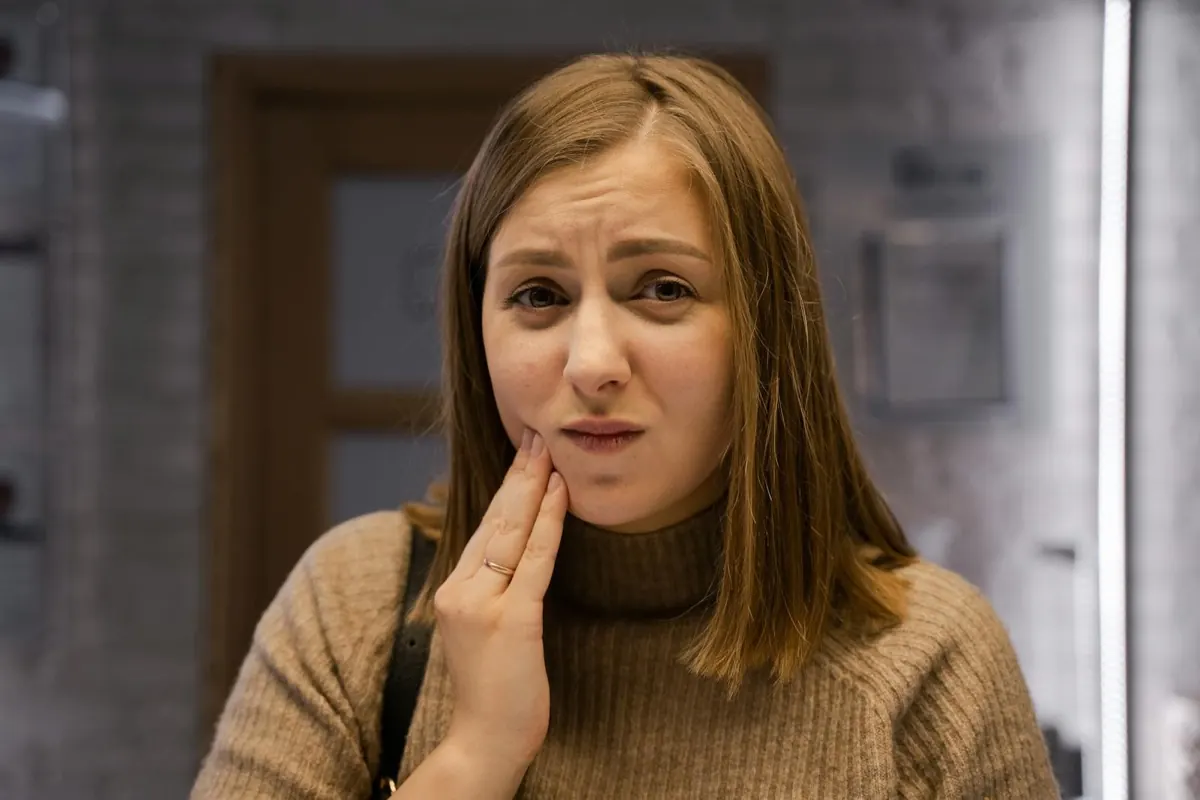
A gnathologist is a dentist who diagnoses and treats problems of the jaw joint (the temporomandibular joint, TMJ), the chewing muscles and the bite — jaw clicking or pain, a mouth that does not open fully, teeth clenching and grinding (bruxism) and teeth that do not meet properly.
Gnathology looks at the teeth, the joint, the muscles and the bite as one system: a click in the joint or a tired jaw in the morning is rarely a problem with a single tooth. At German Dental Clinic, see gnathologist and TMJ treatment in Baku.
Problems they treat
- TMJ dysfunction (TMD) — clicks on opening, pain, limited opening
- Bruxism — teeth clenching and grinding
- Occlusion disorders — improper bite
- Chronic head and neck pain of dental origin
- Vertigo and ear ringing — sometimes related to TMJ
- Occlusion planning before orthodontic or prosthetic treatment
Symptoms — when to see one
- Morning jaw pain or fatigue
- Clicking or grating sound on opening/closing
- Limited mouth opening (normal 40–50 mm)
- Temporal headaches
- Noticeable tooth wear
- Neck and shoulder pain of dental origin
- Complex planning before orthodontics or prosthetics
Diagnostic methods
- Clinical exam — jaw movement, muscle palpation, occlusal contacts
- Photography and video
- X-ray (panoramic, 3D CBCT — TMJ assessment)
- Axiography — recording jaw movement trajectories
- Electromyography — muscle tone
- Polysomnography — if bruxism and apnea are suspected
Treatment approaches
- Splint (mouthguard) — occlusal and nocturnal
- Physical therapy and masseter massage
- Occlusion correction — selective tooth adjustment
- Orthodontic or prosthetic correction
- Botulinum toxin injections
- Surgery — rare, for severe cases
Gnathology is a complex specialty. Cases often require a multidisciplinary approach (dentist + gnathologist + physical therapist + ENT).
Gnathologist in Baku
At German Dental Clinic in Baku, jaw joint, bruxism and bite problems are handled by orthodontist Dr. Ilhama Mustafayeva, whose work includes orthodontic solutions to gnathological problems; in 2025 she completed the course “Gnathology and the transition from splints to orthodontics”.
- Diagnosis — a clinical examination of jaw movement, mouth opening, joint sounds and the chewing muscles, a 3D CBCT scan of the joint and tooth roots and a digital intraoral scan of how the teeth meet. If the joint disc needs to be seen, the dentist orders an MRI separately.
- Splint — a custom occlusal splint, designed from the digital scan and made in the clinic’s own laboratory.
- Bite correction — where needed, after the splint phase the teeth are aligned with braces or clear aligners, or worn teeth are restored with crowns.
Details of the examination and treatment stages: gnathology at German Dental Clinic.
Gnathologist: frequently asked questions
Is a gnathologist a dentist?
Yes. A gnathologist is a dentist with additional training in the jaw joint, the chewing muscles and the bite. Gnathology is most often practised by orthodontists and prosthodontists, because both work directly with how the teeth meet. When the cause of the pain turns out not to be dental, the gnathologist refers the patient to a neurologist, an ENT specialist or a physiotherapist.
What is the difference between a gnathologist and an orthodontist?
An orthodontist moves teeth and corrects the position of the jaws with braces or aligners. A gnathologist looks at how the joint, the muscles and the bite function together and treats pain, clicking and overload — often with a splint first. The two overlap: when a bite problem overloads the joint, the joint is stabilised first and the teeth are then aligned to that position, which is why the same orthodontist frequently does both.
What happens at the first visit to a gnathologist?
The dentist asks about the complaints — when the pain or clicking started, clenching at night, past orthodontic or prosthetic treatment — then checks how far and how straight the mouth opens, listens to the joint, feels the chewing muscles and looks at the contacts between the teeth. Imaging such as a 3D CBCT scan and a digital bite scan usually follows, and the treatment plan is discussed once the cause is clear. Bring any previous X-rays, CT or MRI scans.
Can jaw joint problems go away on their own?
Sometimes. A painless click with normal mouth opening, or jaw muscle soreness after a stressful period, can settle by itself and is usually just monitored. Pain that keeps coming back, a jaw that locks or does not open fully, and teeth that keep wearing down do not resolve on their own and should be examined — the earlier the cause is found, the simpler the treatment.
Can a gnathologist help with headaches and ear pain?
If they come from overloaded chewing muscles or the jaw joint, yes. Typical signs are a headache in the temples in the morning after night-time clenching, and pain in front of the ear while the ear itself is healthy. The examination shows whether the joint and muscles are involved; if they are not, the dentist refers you to a neurologist or an ENT specialist rather than treating the teeth.
Read more
Clinic services on this topic
- Gnathology — diagnostics of the jaw joint, bruxism and bite, a custom splint and a treatment plan
- Orthodontics — braces and aligners, digital diagnostics and a staged treatment plan
- Diagnostics — 3D CBCT, intraoral scan and photo protocol: the step that comes before treatment
Consultation | +994 10 208 01 04