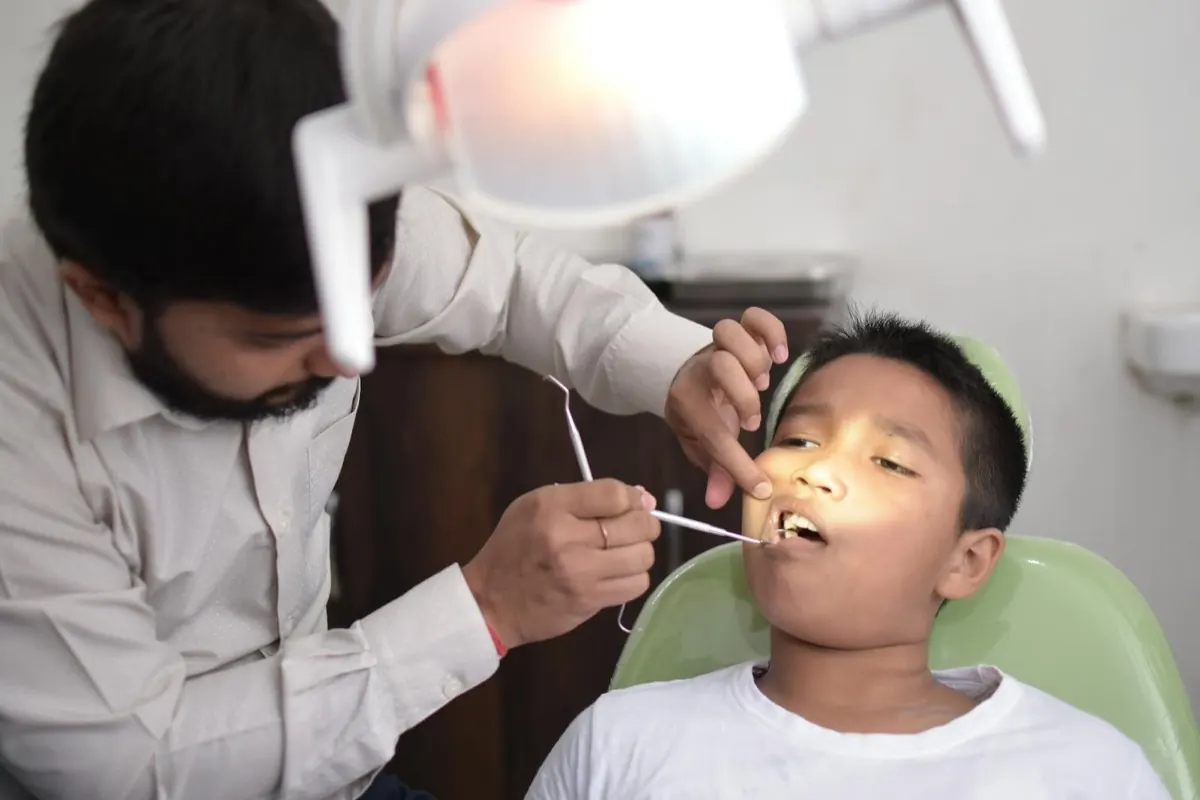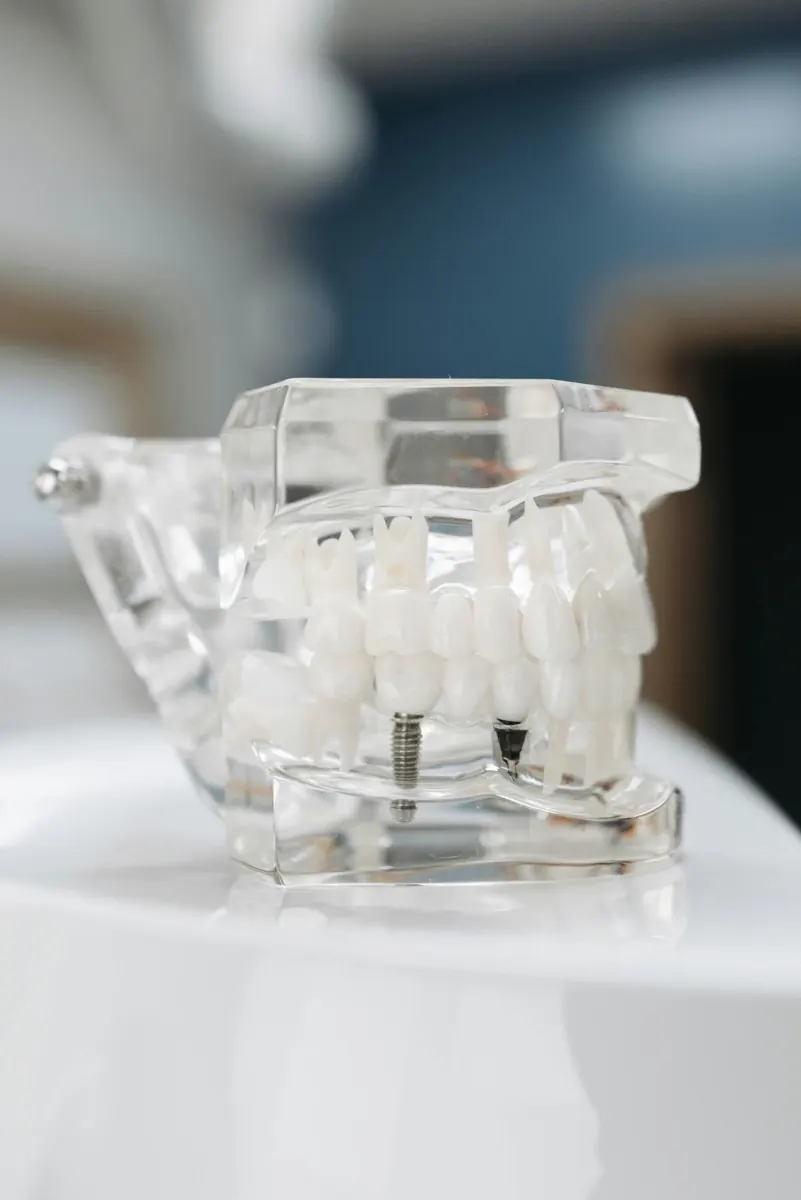
Quick answer: The Bass method is the primary technique recommended by dentists. The brush is placed at a 45° angle to the gumline, with light pressure and small circular motions. Brush for 2 minutes with a soft brush and fluoride paste. Do not rinse afterwards — the fluoride keeps working. A hard brush and horizontal "sawing" motion cause enamel wear and gum recession.
Brushing teeth may seem trivial, but most people do it wrong. The scientifically grounded and most-recommended method by dentists is the Bass technique. It removes plaque most effectively without traumatizing the gums.
What you need
- Soft brush (soft/extra soft) — hard bristles damage enamel and gums
- Fluoride toothpaste (1000–1500 ppm F for adults)
- 2 minutes (a timer or song helps)
- Mirror — for better control
Bass technique — step by step
- Place the brush at a 45° angle to the tooth, bristles pointed toward the gumline
- With light pressure, make small circular or vibrating motions — 10–15 seconds per tooth
- Brush outer, inner and chewing surfaces separately
- Clean the inner side of front teeth with vertical strokes (brush vertical)
- Gently brush the tongue — 3–4 strokes from back to front
- Do not rinse with water (leave the fluoride to work)
6 most common mistakes
- Hard brush and heavy pressure — enamel wear, gum recession
- Horizontal "sawing" motion — outdated, harmful
- Brushing right after eating — wait 30 minutes
- Using the same brush over 3 months — bristles deform
- Skipping floss — interdental spaces stay unclean
- Rinsing too thoroughly — washes away fluoride
Electric vs manual
- Electric (oscillating-rotating or sonic) is preferable for sensitivity or orthodontics
- Manual is equally effective with correct technique
- For children, electric adds gamification and motivation
Floss and interdental brushes
40% of plaque is in interdental spaces where the brush can't reach. Floss once a day, ideally at night. Alternatives — water flosser (waterpik), interdental brushes.
Read more
Clinic services on this topic
- Hygiene — professional cleaning: tartar, plaque and the spots a brush cannot reach
- Periodontal treatment — treatment of the gums and the tissues around the tooth, controlling inflammation
Hygiene consultation | +994 10 208 01 04