
Stomatitis is inflammation of the lining of the mouth. It shows up as painful ulcers, red areas or a white coating, in both children and adults. For treatment to work, the type of stomatitis and its cause need to be known first.
Types of stomatitis
The types differ in how they look, what causes them and how they are treated:
| Type | Signs | Most common in | Treatment |
|---|---|---|---|
| Aphthous | Painful ulcers with a white or yellowish centre and a red border | Teenagers and young adults; linked to stress and vitamin deficiency | Small ulcers heal on their own within 1–2 weeks; anaesthetic gel, removing the trigger |
| Herpetic | Small blisters that turn into ulcers; red gums, possible fever | Children (especially 6 months to 5 years); contagious | A doctor prescribes the antiviral; fluids, pain and fever control |
| Candidal (fungal) | White coating on the tongue and cheeks that wipes off, red underneath | Babies, denture wearers, people with weakened immunity | A doctor prescribes the antifungal; denture hygiene |
| Traumatic | A single ulcer where the injury happened | People with braces, dentures or a sharp tooth edge | Heals once the cause is removed: smoothing the edge, adjusting the denture |
| Allergic or chemical | Redness, burning, ulcers | People sensitive to a toothpaste, medicine or food | Stopping the irritant; a doctor's check if needed |
Causes of stomatitis
- Weak immunity, stress, lack of sleep
- Vitamin and mineral deficiency (B12, iron, folate)
- Poor oral hygiene
- Mechanical injury or chemical burn
- Viruses (herpes, coxsackie)
- Certain medications (antibiotics, chemotherapy)
- Systemic diseases (Crohn's, coeliac disease)
How to treat stomatitis at home?
These measures ease the pain and help healing, but they do not clear a virus or a fungal infection:
- Rinse with warm salt water (1/2 teaspoon of salt per glass)
- Antiseptic mouthwash (for example chlorhexidine) — for a short time, as directed
- Avoid acidic, spicy, salty and hot foods
- Soft brush, gentle hygiene
- Plenty of fluids
- Over-the-counter anaesthetic gels or sprays
When should you see a doctor?
- An ulcer has not healed after 2 weeks
- Many ulcers or large ones (over 1 cm)
- High fever
- Unable to eat or drink
- Signs of dehydration in a child (little urine, dry lips, lethargy)
- Frequent recurrences — vitamin and blood tests may be needed
Stomatitis treatment at the clinic
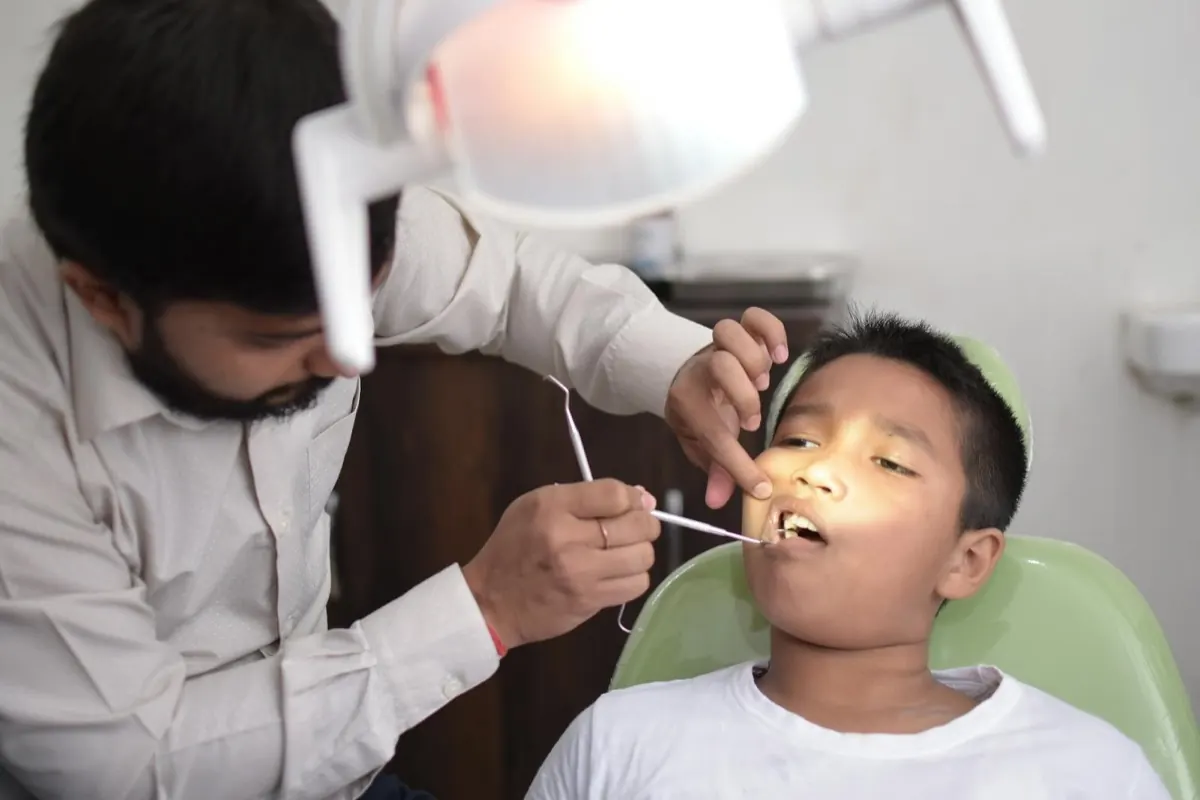
The doctor first examines the mouth to find the type of stomatitis and its cause. Treatment is chosen by type: antiseptics, antivirals for herpes, antifungals for candida and, in some cases, topical steroids — these are prescribed only by a doctor. Removing the cause matters as much: smoothing a sharp tooth edge, adjusting a denture, professional hygiene.
Stomatitis: frequently asked questions
Is stomatitis contagious?
It depends on the type. Herpetic stomatitis is contagious: the virus spreads through kissing, shared cups, cutlery and toys, so avoid these until the ulcers heal. Aphthous, traumatic and allergic stomatitis are not contagious. Candida can pass between a baby and the mother during breastfeeding and through shared dummies.
How long does stomatitis last?
Small aphthous ulcers and herpetic stomatitis usually heal within 1–2 weeks. A traumatic ulcer heals once its cause (a sharp edge, a denture) is removed. Candidal stomatitis often needs antifungal treatment. An ulcer that lasts longer than 2 weeks should be checked by a doctor.
How is stomatitis treated in children?
The main risk for a child is refusing food and drink because of the pain, so keeping them drinking matters most: cool drinks and soft, non-acidic food. For pain and fever, give only medicines approved for the child's age, as directed. Herpetic stomatitis with a fever and a white coating in a baby's mouth (candida) need a doctor's examination. A child's oral health is the field of pediatric dentistry.
What mouthwash helps with stomatitis?
The simplest and safest option is warm salt water. Antiseptic rinses such as chlorhexidine are used for a short time and as directed; for children, only on a doctor's advice. Alcohol-based mouthwashes irritate the ulcers, so avoid them. Rinsing eases the pain but does not treat a viral or fungal cause.
How is candidal stomatitis treated?
Candida leaves a white coating on the tongue and cheeks that wipes off and leaves a red surface underneath. A doctor prescribes the antifungal (gel, drops or tablets). The cause is dealt with at the same time: taking out and cleaning dentures at night, rinsing after inhaled steroids, keeping diabetes under control.
Read more
Clinic services on this topic
- Diagnostics — 3D CBCT, intraoral scan and photo protocol: the step that comes before treatment
- Hygiene — professional cleaning: tartar, plaque and the spots a brush cannot reach
Consultation | +994 10 208 01 04