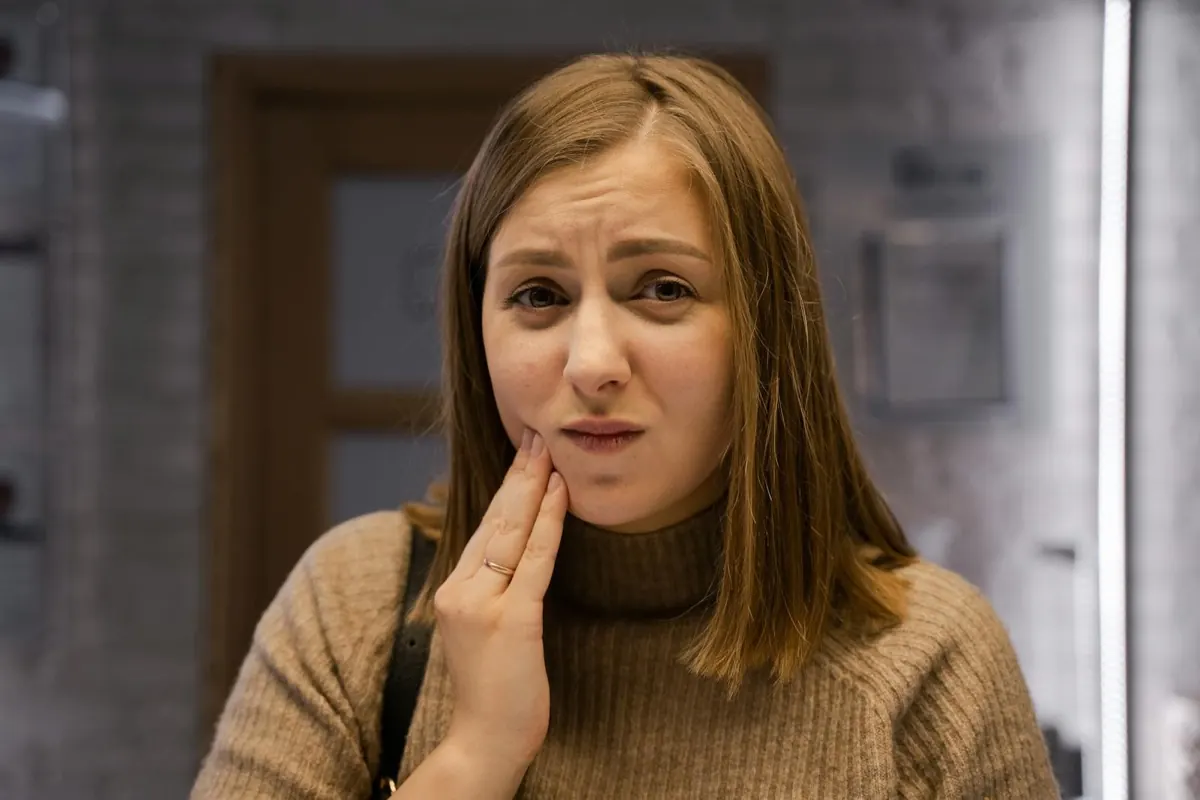
A toothache can strike at the worst moment. The pain usually signals a serious problem – caries, pulpitis, abscess or trauma – and requires treatment.
Most common causes of toothache
- Deep caries – sensitivity to cold/hot/sweet
- Pulpitis – throbbing pain that worsens at night
- Periodontitis / abscess – swelling and pain in the gum
- Cracked tooth – pain when biting
- Erupting wisdom tooth
- Gingivitis
First aid at home: 5 steps
- Rinse with warm salt water (1 tsp salt per glass)
- Take an over-the-counter painkiller (ibuprofen, paracetamol) as directed
- Remove food debris with floss
- Apply a cold compress to the cheek (15 min on, 15 min off)
- Avoid very hot, cold or sweet food/drink
Mistakes to avoid with a toothache
- Don't place aspirin directly on the tooth or gum – it causes chemical burns
- Avoid warm compresses – they worsen inflammation
- Don't self-prescribe antibiotics
- Don't delay seeing a dentist, even if the pain subsides
Warning signs that need an urgent dentist
The following symptoms need emergency dental attention within 24 hours:
- Facial or neck swelling
- High fever (above 38°C)
- Difficulty swallowing or breathing
- Severe pain lasting more than 3 days
- Pus from the gum
These may indicate an abscess or spreading infection – delay is risky. If the swelling spreads to the neck or breathing becomes difficult, do not wait for a dentist — call an ambulance (103).
Toothache in children: what to do
The most common cause of toothache in children is decay in the baby teeth; food stuck between the teeth, a tooth broken in a fall and the first permanent molars coming through at around age 6 can hurt too. At home you can ease the pain like this:
- If your child can rinse, have them rinse with warm water; gently floss out any food stuck between the teeth
- Hold a cold compress to the cheek (ice wrapped in a towel, 10–15 minutes)
- Painkillers only in a children's form (paracetamol or ibuprofen syrup), at the dose on the label for the child's age and weight
- Do not give children aspirin, and do not rub anything onto the tooth or gum — numbing gels are not recommended for children under 2
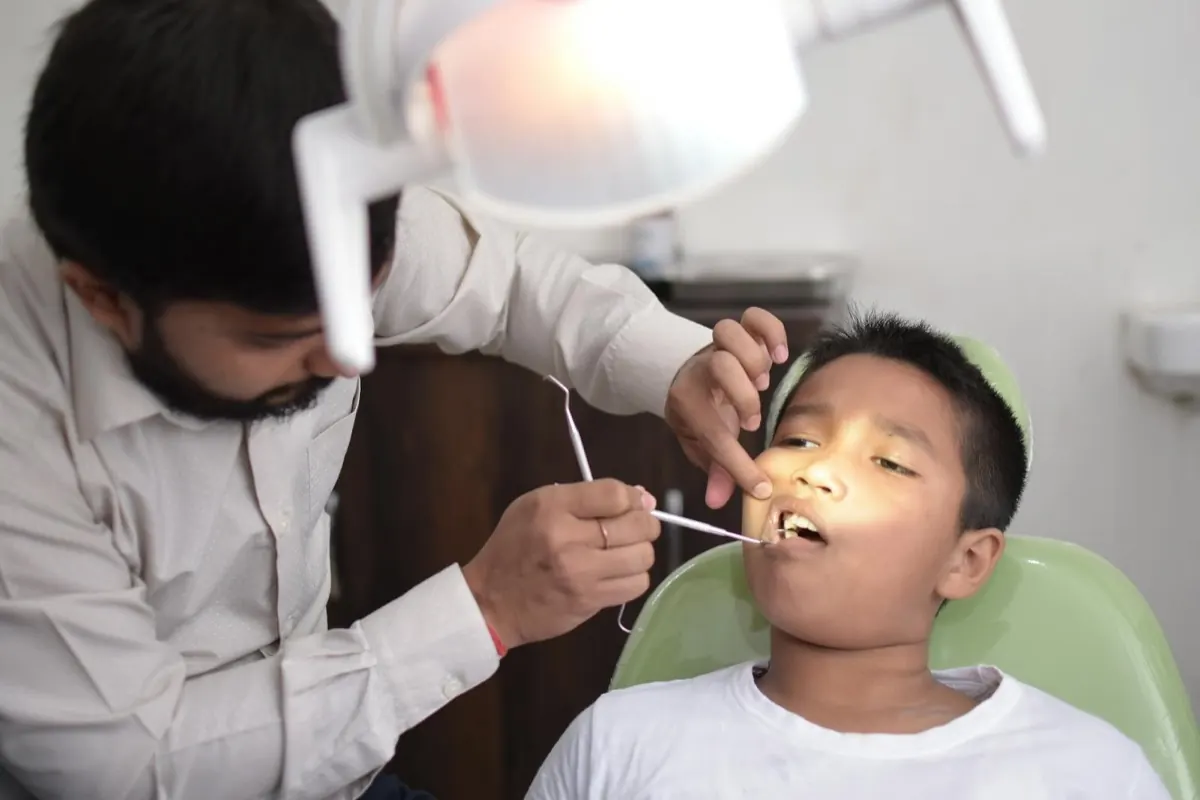
Baby teeth need treatment too: an infection in a painful baby tooth can damage the developing permanent tooth beneath it. If the pain lasts more than a day, take your child to a dentist; with facial swelling, a temperature or pain after a knock — the same day. How a children's visit works: pediatric dentistry; more: tooth decay in children and a chipped tooth in a child.
Emergency dental care at German Dental Clinic Baku
The clinic is open every day: Monday – Saturday 09:00–21:00, Sunday 09:00–18:00. With acute pain, the pain and inflammation are dealt with first, then a treatment plan is made. Precise diagnostics under microscope, painless anesthesia and single-visit endodontic protocols. How an emergency visit works: emergency dental care.
Toothache: frequently asked questions
How can I stop a toothache fast at home?
The two fastest steps are an over-the-counter painkiller (ibuprofen or paracetamol at the dose on the label) and a cold compress on the cheek — a tablet usually starts working within 30–60 minutes. Rinsing with warm salt water and flossing out food stuck between the teeth also help. All of this eases the pain for a few hours but does not remove the cause: caries, pulpitis or an abscess can only be treated by a dentist.
Which painkiller can I take for a toothache?
Ibuprofen and paracetamol are the usual choices — ibuprofen also reduces inflammation, so it often works better for dental pain. Take either only at the dose on the label and never above the daily maximum. If you have a stomach ulcer, kidney disease, asthma, are pregnant or take blood thinners, check with a doctor before taking ibuprofen. Do not put aspirin on the tooth, and do not take an antibiotic as a painkiller — it does not relieve pain.
Do home remedies help with a toothache?
Partly, and only briefly. A warm salt-water rinse and a cold compress are safe. Clove oil can dull the pain for a while, but irritates the gum if applied heavily. Garlic, alcohol, vodka or aspirin placed on the tooth burn the lining of the mouth, and a warm compress makes inflammation worse. No home remedy treats caries, an inflamed nerve or an infection.
Can a toothache go away on its own?
The pain can, the problem cannot. When pulpitis pain suddenly stops, it most often means the tooth's nerve has died — the infection can then spread to the root tip and cause an abscess or cyst, which needs more complex treatment. Only brief sensitivity to cold, or pain from food stuck between the teeth, goes away once the cause is gone. Even if the pain has stopped, have the tooth checked — see tooth abscess.
Can a toothache spread to the head or ear?
Yes. The teeth, jaw, ear and temple share the same facial nerve (the trigeminal nerve), so pain from the upper back teeth can be felt in the temple or eye, and pain from the lower back teeth and wisdom teeth in the ear and neck. That is why people sometimes cannot point to the tooth that hurts. It also works the other way: sinusitis or an ear infection can feel like pain in the upper teeth. An examination and X-ray find the source.
What should I do about a toothache during pregnancy?
There is no need to put up with toothache until the end of pregnancy — acute pain and infection are more dangerous for mother and baby than treatment. Paracetamol is the usual painkiller in pregnancy; ibuprofen, especially in the third trimester, is not taken without a doctor's approval. Tell the dentist how far along you are: necessary treatment and local anaesthesia are possible in pregnancy, and the most comfortable time for planned treatment is the second trimester. More: pregnancy and dental treatment.
Clinic services on this topic
- Emergency dental care — for acute pain, swelling and injuries: pain and inflammation first, then a treatment plan
- Endodontics — root canal treatment under a microscope, removing the cause of the pain
- Pediatric dentistry — treatment of baby and permanent teeth, a calm visit for the child
- Diagnostics — 3D CBCT, intraoral scan and photo protocol: the step that comes before treatment
Book online or call +994 10 208 01 04.